
Reflection
When I first started this series 1.5 years ago, I had no idea what it would turn into. I had a simple goal of trying to provide an introductory education into morals and ethics complementary to what Dr. Beyda teaches us. Philosophy has so many barriers when trying to learn it, from odd vocabulary to the complicated nature of arguments, and it was my hope to reduce some of that activation energy for you. Although my papers were long, I promise I was distilling it down as best I could, without losing too much meaning behind what I was writing.
I also had the goal of trying to create a permanent easily accessible record of these teachings, so that if Dr. Beyda’s hours were reduced (they were), and if he ever left (he must some day), students would still have something to lean on when pondering the critical question: how do I become a more ethical physician? Now don’t get me wrong, in no way do I think these papers are a replacement for Dr. Beyda’s knowledge and experience, but I hope to at least provide something of a fire-starter for the curious mind.
Through my first 10 papers I never shared my own beliefs, except for the single mention that I am a contractualist in the Deontology paper. I learned from my own philosophy 101 professor, Dr. Preyba, to present these deep topics in a neutral manner, so that the reader may come to their own conclusions. I would encourage you in life to do the same. Knowing when to teach vs. when to persuade is an important distinction to make. That does not mean you cannot make moral claims, or ever try to persuade, but knowing when to introduce your own personal bias is something to always be aware of.
In line with this, I also would encourage you to openly discuss moral topics with people, no matter how heavy or uncomfortable they are. First, it is healthy to open up about the trauma you will experience through medicine. Second, it will help you to grow. The only way to know when you have gone awry, or if your logic is wrong, is to engage with others who may point it out to you. The odds of us being wrong, at least in part, seem high; don’t be so arrogant that you assume you are not morally misguided. In the words of T.M. Scanlon, “Working out the terms of moral justification is an unending task.”
Dr. Beyda
I want to take a second to thank Dr. Beyda for the great work he has done for years at this school. I have had the chance to learn a lot from him, both in class and in his electives, and have been forced to consider things I wouldn’t otherwise have until it was too late. Given that the school has reduced his total lecturing hours, the younger classes are truly losing out on such a valuable experience. Reducing the hours of ethics in a medical curriculum is to suggest that the “how” of medicine is more important than the “why.” This mindset is a disservice not just to the students, but to the thousands of patients who will eventually rely on our moral clarity as much as our clinical skill. After all, as Dr. Beyda so often reminds us, “the most important thing we bring into a patient’s room is ourselves.”
So thank you Dr. Beyda, for everything you’ve done, and all the lives you’ve changed for the better, both ours and our patients’.
You All
Lastly, I want to thank all my readers. I have no idea how many there are, although I’m sure it’s not too numerous given the dryness of the content.

Regardless, thank you for always reading to try to learn and better yourself. We have the rare opportunity and privilege to be in charge of people’s health, and we should take the utmost care to make sure we are adequately informed not only in medical knowledge, but in the ethical way in which to use that knowledge. And even as studied and self-aware as we are, our ethical intuitions are always going to be biased. So keep reading and keep improving, because while trying to do good is necessary, intentions alone are not sufficient.
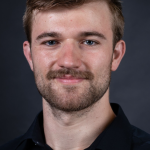
Travis Seideman
Travis Seideman is a member of the Class of 2026 at UACOM-P. He attended Northern Arizona University where he studied Exercise Science and Psychology. He is pursuing Family Medicine and is passionate about increasing primary care access in Arizona, especially for underserved areas.