
Learning how to become a doctor begins long before medical school. Through our personal experiences with the healthcare system, we develop our own ideas of “good” and “bad” medical care. In this way, the physicians we meet, either as patients or through our loved ones, become our first teachers and role models.
I met my first physician role model at two months old—Dr. Avery Weiss at Seattle Children’s Hospital. As an ophthalmologist, he saved much of my vision. Due to my condition’s complexity and the need for monitoring, I saw Dr. Weiss semiannually for 21 years. His brilliance, humor, kindness, and attentiveness impacted my life in numerous ways.
As I prepare to graduate, I reflect on the lessons Dr. Weiss taught me about medicine. Though I learned them as a patient, they have been invaluable during my medical education. What follows are just a few of the things he taught me.
- Patients deserve a thorough physician.
Every appointment at Seattle Children’s was an all-day event. My mom cleared her schedule, and I took the day off school. But we did not resent the long appointment times because we knew that when we finally saw the doctor, he would take care of everything.
He began with a careful history and meticulous exam, checking every measurement himself, something relatively uncommon among physicians in his specialty. What’s more, when my mom inevitably asked him to double-check something, he did so without a flicker of annoyance.
As an undergraduate student, I had the pleasure of “shadowing” Dr. Weiss. I learned my experiences were not unique. He spent time with every family doing whatever he believed was indicated, even if it meant going far beyond what would constitute a traditional ophthalmology exam. His thoroughness instilled confidence among his patients.
- Medicine is about people, not ego.
I did not always realize it, but Dr. Weiss was a pillar in the world of pediatric ophthalmology. His obituary, published in the Journal of the American Association for Pediatric Ophthalmology and Strabismus, highlighted his status as a world-class physician. But he was not one to boast, at least not to patients.
Instead of describing his achievements to build rapport, Dr. Weiss took the time to establish and maintain a personal relationship with his patients and their families. It was the little things he did that made one feel special and known. The way he called me “pumpkin,” or how he joked that my mom’s idiosyncrasies would make her an excellent hospital administrator. His good-natured humor and patience put me at ease, even during tense and stressful times.
- Value your team members and the worth they bring to the patient.
Excellent physicians lead excellent teams. Even as a young child, I recognized that many people were involved in my medical care. I was particularly fond of one ophthalmic technician, who always seemed to keep Dr. Weiss on track. With a gentle smile, she ensured he addressed every document that needed his signature, ignoring his incoherent mumbling about “too much paperwork.” He would then turn to me and say, “I don’t know what I would do without her.” Their support and respect for one another were obvious.
We may not realize it, but patients can often tell when a team functions cohesively and when it does not. As leaders of the healthcare team, how physicians treat other staff members matters, and their actions set the tone.
- Good patient education is empowering.
By the time I “graduated” from Seattle Children’s, I was an expert when it came to my own eyes. I knew the medical jargon related to my condition, the procedures I had, and the medications I took. I owe this education to Dr. Weiss, who took the time to explain the nuances of my condition so I could understand and explain it to others.
This understanding of my own health made me a more confident person. I could talk about my situation with teachers, other physicians, and even family and friends. By teaching me the technical language, Dr. Weiss helped me advocate for myself, something I had struggled with for many years. Understanding my health allowed me to find the resources I needed to succeed.
Dr. Weiss died in 2024 at the age of 75 of a glioblastoma. A prolific researcher, talented surgeon, and innovative thinker, he left a lasting impact on the world. I will always be grateful for the vision he saved and for the confidence he helped instill in me.
For all my peers about to graduate from medical school, I urge you to consider your own physician role models and remember that soon, others will be looking up to you and learning from your example. As physicians, we are uniquely poised to touch the lives of countless people. Let us strive to leave a legacy worth remembering.
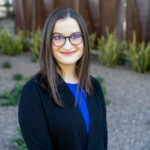
Christine Spatacean
Christine Spatacean is a fourth-year medical student at the University of Arizona College of Medicine-Phoenix. She was born and raised in Washington state and is a graduate of Seattle Pacific University, where she earned a Bachelor of Science in Biochemistry. This June, she will begin a pediatric residency at Phoenix Children’s Hospital. She is passionate about serving children with physical and intellectual disabilities. Christine welcomes communication regarding this submission and can be contacted via email at cspatacean@arizona.edu.